


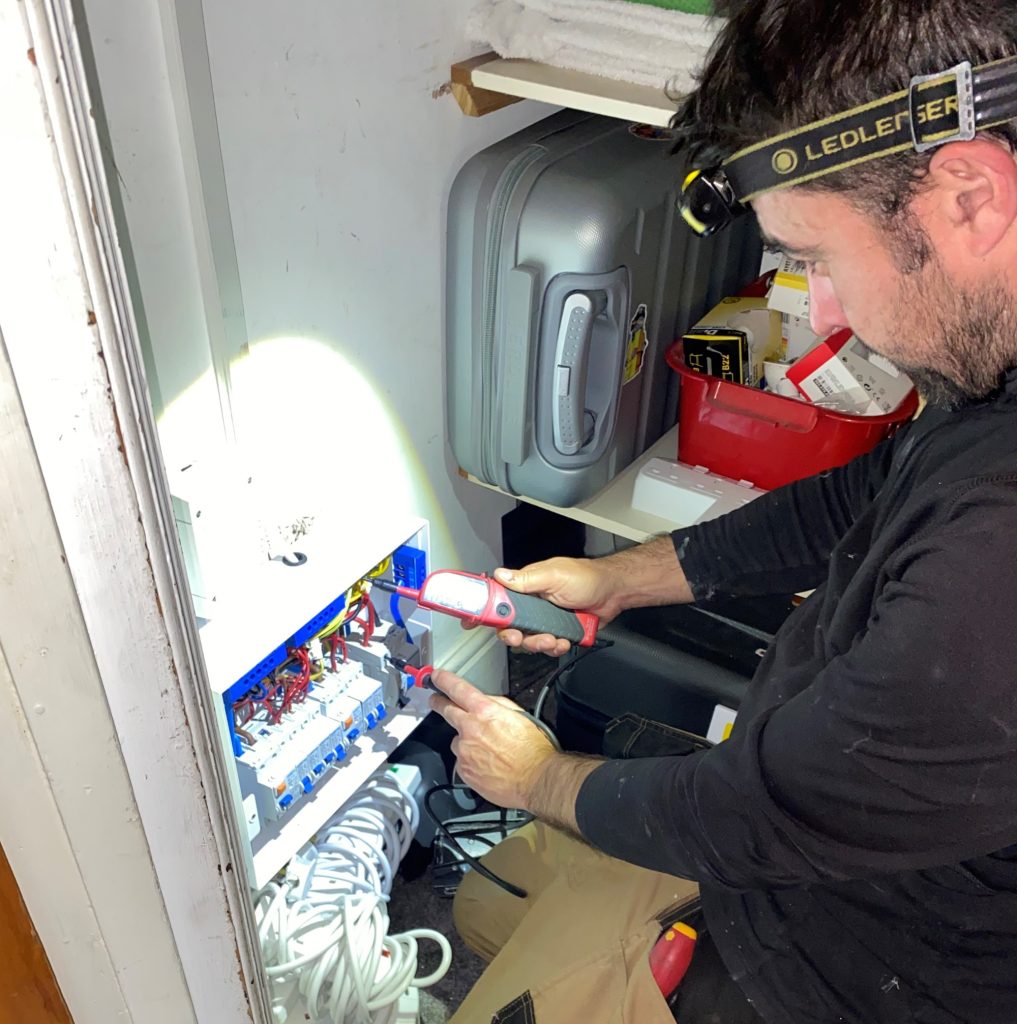
Your fuse box, or consumer unit, is the part of your electrics that keeps you safe when something goes wrong. Many homes around Cardiff still have boards that were fitted decades ago and don’t give the protection a modern home needs. Here are the signs it’s time to look at a replacement.
Signs your fuse box is out of date
- Fuses with fuse wire instead of switches. Older boards use rewireable fuses. When one blows, it has to be rewired by hand, and they don’t protect you from electric shock.
- No RCD protection. RCDs are the switches that cut the power in a fraction of a second if current leaks to earth, which is what protects a person from a serious shock. If your board has no RCD, or only one covering a few circuits, it’s well behind current standards.
- A plastic consumer unit fitted before 2016. Since 2016, consumer units in homes have had to be made from non-combustible material, usually metal. An older plastic board isn’t automatically dangerous, but it’s worth having it looked at, especially alongside any of the other signs here.
- A wooden backboard, black cables or cracked casing. These usually mean the installation is old.
- Trips you can’t explain, buzzing, or warmth. A board that buzzes, feels warm or smells of burning needs checking straight away.
- You’re adding something big. An EV charger, an electric shower, a new kitchen or an extension may need spare ways or better protection than your current board can give.
What a replacement involves
For most homes, replacing a consumer unit takes around a day. On the day I will:
- Test your existing circuits first, because a new board can’t fix faults that are already in the wiring. If I find any, I’ll explain them before going further.
- Turn the power off and swap the old board for a modern metal unit with RCD protection for your circuits.
- Label every circuit clearly, so you know which switch does what.
- Test everything again, switch you back on and show you how the new board works, including the test buttons.
Expect to be without power for most of the working day, so it helps to plan around the fridge and freezer and anyone working from home.
The paperwork you should get
Replacing a consumer unit is notifiable work under the Building Regulations. That means it has to be done to BS 7671, the UK wiring regulations, tested, and certified, with the work notified to building control. Keep the certificate safe: you’ll be asked for it when you sell the house.
Is it worth doing before it fails?
In most cases, yes. An upgrade gives you proper protection against electric shock and fire, fewer nuisance trips once faults are sorted, and room for future work such as an EV charger. It’s also far less stressful to plan than to do in an emergency.
If you’re not sure whether yours needs replacing, send me a photo of your fuse box on WhatsApp or read more about fuse box replacement. Quotes are free. Call 029 2000 1399.


